
Summary
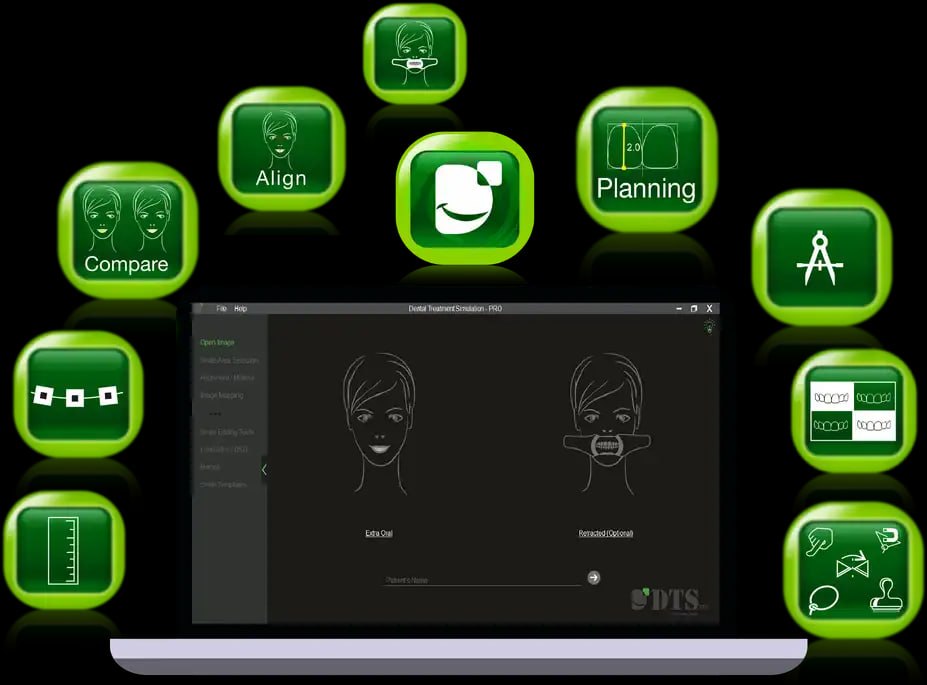
DTS Pro 2D + 3D 21.3 is an AI powered smile simulation and digital smile design software. DTS stands for Digital Treatment Simulation. This software helps dentists show patients how their smile will look after treatment. Before DTS, dentists described treatments with words. Patients could not visualize the result. Case acceptance was low. DTS changes this completely. You take a simple photo of the patient. You upload it to the software. Within minutes, you show the patient a realistic simulation of their new smile. The software uses artificial intelligence and machine learning to create natural looking results. Version 21.3 is the latest release with improved AI algorithms and faster processing.The Patient Communication Problem It Solves
Every dentist faces the same problem. You explain a treatment to a patient. You show them before and after photos of other cases. You tell them their smile will look beautiful. But the patient cannot see it. They cannot imagine how their own face will look. They hesitate. They say they need to think about it. They leave. Many never come back. DTS Pro solves this communication gap.You take the patient’s photo. You design their new smile directly on their face. You show them the simulation on a screen. The patient sees their own smile transforming in real time. They see the teeth getting whiter. They see the gaps closing. They see the shape improving. The emotional impact is powerful. Patients say yes more often. Case acceptance rates increase significantly.
What You See When You Open DTS Pro For The First Time
You install and launch it. A clean, modern interface appears. The centre of the screen is the photo workspace. This is where your patient photos will appear. On the left side, you see the patient list. You can organize cases by name and date. On the right side, you see the design tools. Tooth selection tools. Shape adjustment tools. Color adjustment tools. Smile curve tools.On the top, you see the mode selector. You can switch between 2D mode for photo simulations and 3D mode for printable mockups. The interface is designed for clinical workflow. You do not need to be a tech expert. Most dentists start designing their first smile within 15 minutes of opening the software. The AI assistant guides you through each step.
Can You Upload A Photo And Create A Smile Simulation
Set a timer for five minutes. Open DTS Pro 2D + 3D 21.3. First, upload a patient photo. Click the Upload button. Select a clear frontal photo of a patient smiling. The photo loads into the workspace. Second, let AI detect the face. Click the AI Detect button. The software automatically finds the eyes, lips, and teeth. Third, select the teeth you want to modify. Click on a tooth. The software highlights it. Fourth, adjust the shape. Drag the slider to widen or lengthen the tooth.The simulation updates instantly. Fifth, adjust the color. Drag the whitening slider. The teeth become brighter instantly. Sixth, show the patient. Click the Split Screen button. The left side shows the original smile. The right side shows the simulated smile. Within five minutes you have created a realistic smile simulation. The patient sees the transformation immediately. This test shows why DTS is so effective for case acceptance.
Daily Clinical Applications
Here is a list of common clinical tasks that you can perform with DTS Pro 2D + 3D 21.3 daily:- Create natural smile simulations using simple patient photos
- Design single tooth restorations like bonding and veneers
- Plan whitening treatments and show expected results
- Simulate gingival recontouring for gummy smiles
- Design full mouth rehabilitations with multiple teeth changes
- Create orthodontic simulations showing tooth movement over time
- Adjust jaw position and lip support for comprehensive cases
- Generate 3D printable mockups for patient try in
- Create shell temporaries for preview before final restoration
- Design injectable composite guides for direct restorations
- Export smile designs to CAD/CAM for lab communication
- Share simulations with patients via email or messaging apps
From Single Tooth Bonding To Full Mouth Rehabilitation
DTS handles cases of all complexity levels. The first example is a simple bonding case. A patient has a chipped front tooth. You take a photo. You use DTS to simulate the repaired tooth. The patient sees how natural it will look. They approve the treatment immediately. The second example is whitening. A patient wants whiter teeth but is worried about unnatural results.You simulate different whitening levels. The patient chooses their preferred shade. They trust the result because they saw it first. The third example is orthodontics. A teenager needs braces but is nervous about how they will look. DTS simulates tooth movement over several months. The patient sees the final straight smile. Motivation increases. Compliance improves. The fourth example is full mouth rehabilitation.
Where DTS Causes Frustration
No software is perfect. DTS Pro 2D + 3D 21.3 has some problems that users report. The first complaint is the learning curve for 3D features. 2D simulations are very easy. 3D mockup design takes more practice. The second complaint is photo quality dependency. The software works best with high quality frontal photos. Poor lighting or bad angles reduce simulation quality. The third complaint is the price for the full 3D version. The Pro 2D version is affordable. Adding 3D features increases the cost significantly.Where DTS Provides Relief
Some problems have frustrated dentists for years. DTS solves those problems. Problem one is patient imagination gap. Patients cannot visualize treatment results. DTS shows them clearly. Problem two is case acceptance rate. Many patients say yes after seeing their simulated smile. Problem three is treatment planning uncertainty. You can test different designs on the same photo. You see what works best before you start treatment. Problem four is lab communication.DTS Pro 2D Versus DTS 3D
DTS comes in two versions. Understanding the difference helps you choose. DTS Pro 2D is for photo based smile simulation. You upload a photo. You design the smile on the photo. You show the patient. That is it. No printing. No physical mockups. This version is perfect for general dentists, cosmetic consultations, and orthodontists. It is affordable and easy to learn. DTS 3D includes everything from Pro 2D.| Feature | DTS Pro 2D | DTS 3D |
|---|---|---|
| Photo smile simulation | Yes | Yes |
| AI face and tooth detection | Yes | Yes |
| Orthodontic simulation | Yes | Yes |
| Printable mockups | No | Yes |
| Shell temporaries | No | Yes |
| Injectable composite guides | No | Yes |
| Lab CAD/CAM export | No | Yes |
| Learning difficulty | Easy | Moderate |
| Price | Lower | Higher |
What Computer You Need And How Fast It Works
DTS Pro 2D + 3D 21.3 has modest technical requirements. The software runs on Windows 10 or Windows 11. Mac users can run it through virtualization software like Parallels. The processor should be Intel Core i5 or AMD Ryzen 5. Core i7 or Ryzen 7 is recommended for 3D work. RAM needs are simple. 8 GB is the absolute minimum for 2D simulations. 16 GB is recommended for smooth performance. 32 GB is ideal for complex 3D designs. The graphics card matters for 3D rendering. Integrated graphics work for 2D simulations.Is DTS Pro Worth Adding To Your Dental Practice
This is the honest question every dentist must answer. Ask yourself these questions. Do you frequently present cosmetic or restorative treatment plans? Patients need to see the result. DTS helps. Do you struggle with patient case acceptance? Patients say they need to think about it. DTS increases acceptance rates. Do you want to stand out from other dentists in your area? Smile simulation is a competitive advantage. Do you have a Windows computer in your practice? DTS requires Windows.Frequently Asked Questions
Q1: What is DTS Pro 2D + 3D 21.3?It is AI powered dental smile simulation software. Dentists use it to show patients how their smile will look after treatment using simple photos.
Q2: How long does it take to create a smile simulation?
2D simulations take 1 to 3 minutes once you learn the workflow. 3D mockup generation takes 5 to 10 minutes.
Q3: Do I need special photos or a professional camera?
No. The software works with standard frontal photos from a smartphone. Good lighting and a straight angle produce the best results.
Q4: What is the difference between DTS Pro 2D and DTS 3D?
Pro 2D does photo based smile simulations only. DTS 3D adds printable mockups, shell temporaries, injectable guides, and lab CAD export.
Homepage:
Note: This price Is For Single PC License. If You Want To Buy KeyGen Then You Have To Go On Telegram ID @playoutking
Our Paid Service
Looking for full-version software without limitations? You’re in the right place. Instead of wasting time on unreliable or outdated sources, unlock a powerful bundle of 10k+ premium tools covering marketing, SEO, broadcasting, automation, and business productivity — all in one place at an affordable price. This collection is specially curated for freelancers, agencies, and business owners who want fast, real results with professional tools.
Direct contact: :
Join Us For Update :
Join Us For Updated :
You Can test through AnyDesk before Buying,
And When You Are Satisfied, Then Buy It.
Unlimited PCs/Users.
Join today and upgrade your workflow with premium tools.
Looking for full-version software without limitations? You’re in the right place. Instead of wasting time on unreliable or outdated sources, unlock a powerful bundle of 10k+ premium tools covering marketing, SEO, broadcasting, automation, and business productivity — all in one place at an affordable price. This collection is specially curated for freelancers, agencies, and business owners who want fast, real results with professional tools.
Direct contact: :
Join Us For Update :
Join Us For Updated :
You Can test through AnyDesk before Buying,
And When You Are Satisfied, Then Buy It.
Unlimited PCs/Users.
Join today and upgrade your workflow with premium tools.