

Summary
Working as part of an engineering team, I’ve seen firsthand how PSS SINCAL simplifies complex Network analysis for transmission and distribution systems. It’s not just a simulator; it’s an integrated solution used in over 100 countries. Whether you’re involved in protection, planning, or operations, this tool is a reliable part of any modern grid management system. Siemens has truly developed something powerful with Gridscale X, making PSS SINCAL one of the most versatile tools available. What sets it apart is how it supports professionals, consultants, researchers, and IT experts alike, each finding tailored value through its modular, curated features. From industrial plant operators to business leaders and engineering teams, everyone benefits from the open, scalable platform.Intelligent Power System Management
In over 20 years of working alongside grid engineers, I’ve found PSS SINCAL to be one of the most flexible and customizable tools available today. Siemens has made it a core part of its Gridscale X ecosystem, and what really stands out is how it supports the entire workflow of planning, operation, and restoration in electrical systems. Whether you’re designing for industrial, distribution, or transmission networks, this modular, integrated solution allows you to simulate, study, and manage a wide variety of real-world challenges.It’s not just built for stability; it’s engineered for growth, adapting to changing environments and complex interconnection setups across low, medium, and high-voltage grids. The tool is packed with powerful functions that enable deep analysis of frequency stability, power quality, and protection coordination, even with distributed generation. In my fieldwork, making economic, data-driven decisions was a constant pressure, and PSS SINCAL truly offers the precision and agility needed to do just that.
Intelligent Simulation
Planning network expansions or adapting to new grid demands requires tools that are both powerful and flexible. From my experience working on mid-size regional grids, tools like PSS SINCAL offer unmatched precision in outage assessments and scenario modeling. Whether the goal is to increase utilization of existing assets or ensure technical reliability, the software’s simulation capabilities make a difference.Real-World Adaptations
Using PSS SINCAL, we can easily validate both expansions and adaptations, analyzing them from a technical and economic perspective. In one of my projects, simulating an energy supply interruption revealed weak points that would’ve gone unnoticed with static planning. This early insight allowed for extensions in the network without massive infrastructure changes. It’s all about leveraging the right tools for accurate design and future-ready planning.Fast Renewable Integration
Renewables aren’t a future challenge, they’re today’s reality. With PSS SINCAL, planners like me can run detailed analyses of connection requests for wind or solar projects. The tool helps determine how much DER (Distributed Energy Resources) a system can reliably handle.Realistic Simulation Scenarios
Using smart meter data, we’ve simulated realistic scenarios where technical losses increased during cloud cover or low wind. What’s powerful is how automated modules generate a fast assessment of available renewable integration capacity, considering standards and grid compliance. In one case, a short circuit simulation on converters revealed harmonic risks, and we extended it with EMT (Electromagnetic Transients) and unbalanced RMS to mirror the field situation more accurately.Tackling Distribution and Transmission as One
In traditional planning, transmission and distribution were treated as separate worlds. But DERs are changing that. When I used PSS SINCAL to analyze a wind farm’s effect on upstream systems, I noticed assumptions made in isolation led to major blind spots. That’s where PSS SINCAL shines, allowing a planner to collectively assess impacts on both T&D systems. With the increasing integration of renewables and even energy storage, the ability to simulate their impact across the entire network is vital. This integrated view supports more reliable operations and long-term investments.Mastering Protection with Visualization and Precision
PSS SINCAL doesn’t just stop at grid design; it dives deep into protection analysis. I’ve worked closely with protection engineers who rely on the tool for coordination, validation, and settings calculations. The visualizations help map out thermal risks and run system-wide protection studies. During one study, we used automated simulations to test for protection performance under multiple contingencies. The built-in models supported detailed thermal destruction analysis, helping avoid costly on-site failures.Intuitive Interfaces for Easier Data Analysis
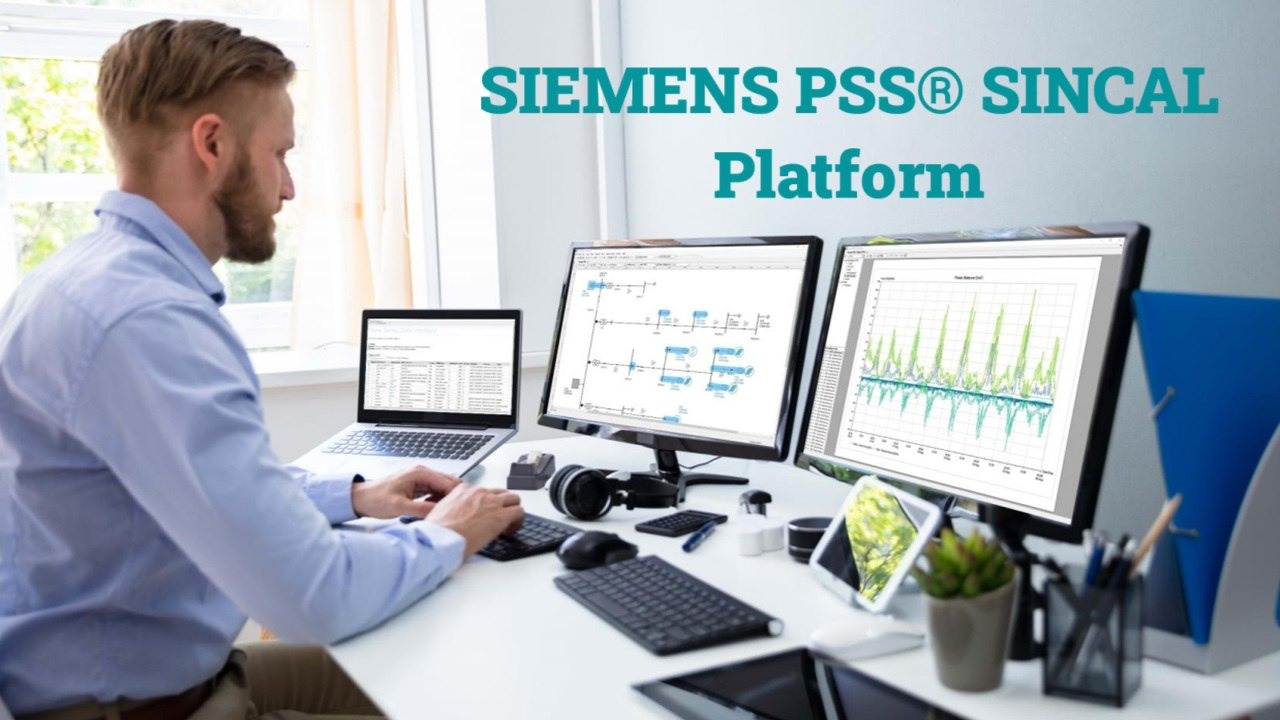
What makes PSS SINCAL even more practical is its graphical user interface. The interactiveness feels close to working in a live GIS application. You can overlay online and offline background maps, toggle between schematic and geographic views, and switch to multi-dimensional display modes for different tasks.As a long-time user of List & Label, I appreciate how easily the report generator presents data. Add in the comparison options, network editor, and Expert Mode like PSS NETOMAC, and you get a toolkit that adjusts to your depth of expertise.
A Flexible Platform with Open Integration
PSS SINCAL isn’t just software; it’s a platform with open architecture that blends well with other systems. In one project, I connected our grid model with SCADA, DMS, and MDMS for complete visibility. The data modeling supports smart grid functions across multiple modules.Advanced algorithms cover everything: Power Flow, Fault Analysis, Contingency Analysis, EMT, Harmonics, Flicker, and even Grid Code Compliance. You can work with schematic, geographic, or multi-layer diagrams, depending on what you’re simulating.
Building Scalable, Detailed Network Models
From a simple bus-branch model to a complete substation, PSS SINCAL supports deep network modeling. In one major grid upgrade, we used variants, timestamps, and the include network feature to manage different scenarios and timelines effectively. You can model anything from balanced to four-wire or even transposed systems. The tool’s co-simulation feature saves a huge amount of time when running integrated simulations.Optimized Simulation Engine for Demanding Projects
With its high-speed, parallel processing, the simulation engine in PSS SINCAL handles data with exceptional performance. It adapts complexity to task size, allowing for task-oriented algorithms that maintain precision. Its modular structure means you can adjust for frequency, structure, or phases. Whether the job is big or small, the engine scales without compromising results.Easy Project Management with Linked Databases
In collaborative work, project management is key. I’ve used Microsoft Access, SQLite, and even SQL Server as backends for model management. With PSS SINCAL, we can track all changes, link distributed databases, and refer to the initial case for audits. The ability to reconfigure and manage networks helped our team manage a national grid split across regions without losing data integrity.All-in-One Electricity Modules for Engineers
For operations engineers, PSS SINCAL supports every stage of data import, network modeling, basic and extended calculations, and advanced protection simulations. The workflow matches the logic of daily tasks, reducing the learning curve for new engineers. Whether in the time or frequency domain, the tools are there for any analysis. And as a trainer, I’ve seen new hires build confidence within days.Pipe Network Capabilities That Go Beyond Electricity
It’s not just about power. PSS SINCAL also supports pipe networks. I’ve worked on heating, cooling, gas, and water networks, and having planning, operational, and model management in the same environment improves consistency. Each module helps ensure cross-domain integration and efficiency across infrastructure teams.Smarter Contingency Planning with CA Module
The revised Contingency Analysis (CA) module is a lifesaver when managing operational sequences. You can simulate, create, and configure contingencies either manually or automatically. I love how it aligns with real operational planning. Multicore calculation and result synchronization with network graphics make it easier to spot problem areas. It also works well in automated tooling environments with strong interfaces.Efficient Network Splitting with OT Module
I recently used the Optimal Branching (OT) module to separate a dense meshed network into radial networks for better efficiency. It considers equipment utilization, voltage bands, and minimum losses. The algorithm is newly revised and supports multicore processing. You also get a fresh user interface and better evaluation options for final results.Visual Upgrades with New Color Scheme
The new default color scheme in PSS SINCAL improves both design and accessibility. For clients with specific branding, we use the color configuration panel to adapt colors based on semantics, feedback, or evaluation types. This also enhances clarity during visualization, especially for presentations.HomePage
Note: This price Is For Single PC License. If You Want To Buy KeyGen Then You Have To Go On Telegram ID @playoutking
Our Paid Service
If you want to Purchase KeyGen Activator / Cracked Version /License Key
Contact Us on our :
Join Us For Update :
Join Us For Updated :
Crack Software Policies & Rules:
You Can test through AnyDesk before Buying,
And When You Are Satisfied, Then Buy It.
Lifetime Activation, Unlimited PCs/Users.
If you want to Purchase KeyGen Activator / Cracked Version /License Key
Contact Us on our :
Join Us For Update :
Join Us For Updated :
Crack Software Policies & Rules:
You Can test through AnyDesk before Buying,
And When You Are Satisfied, Then Buy It.
Lifetime Activation, Unlimited PCs/Users.


